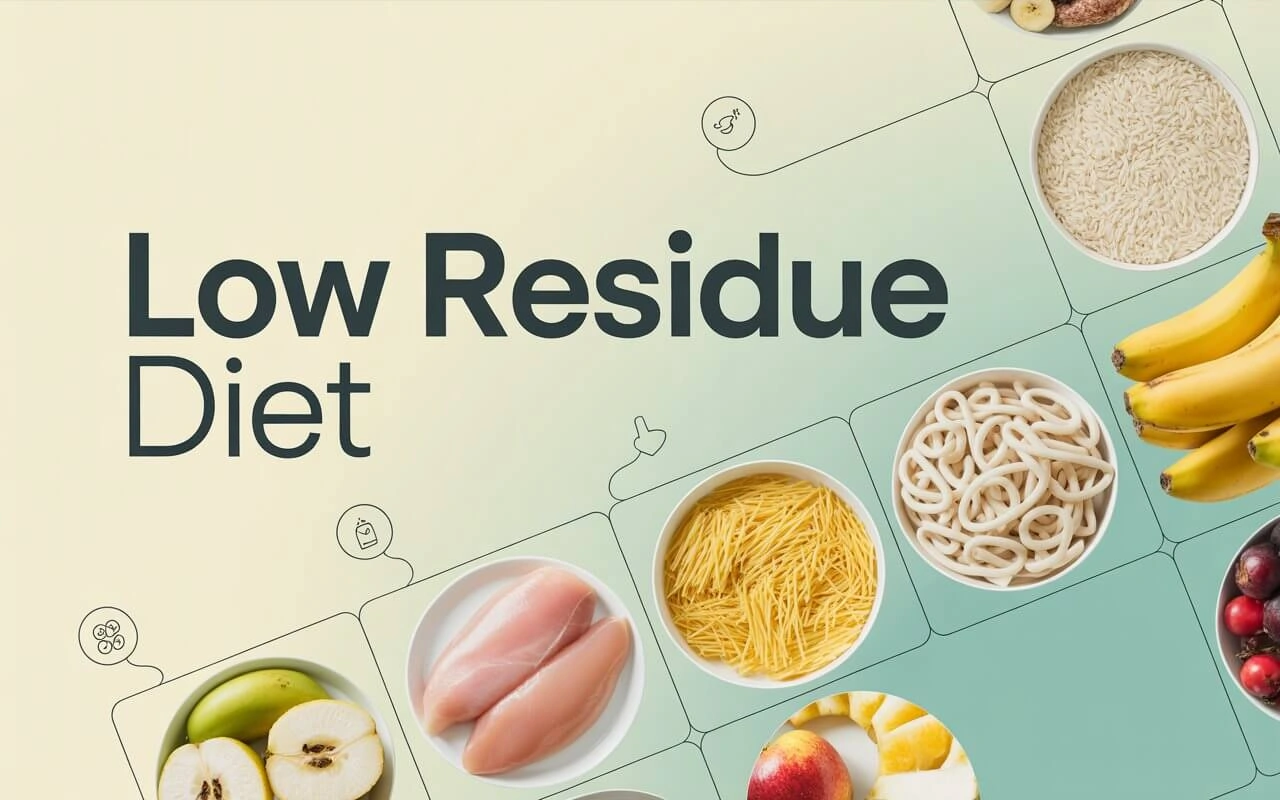
Digestive issues have a way of disrupting daily life in ways most people don’t realize until they experience them firsthand. As someone who writes extensively about healthy snacks for weight loss and gut-friendly eating, I’ve worked with readers who suddenly had to pause their usual fiber-rich routines and switch to something far more controlled. That’s often where the low residue diet comes in.
This guide breaks down what is a low residue diet, why doctors recommend it, and how you can follow it without feeling overwhelmed or undernourished. Whether you’re preparing for a medical procedure or managing digestive conditions, this article aims to give you clarity, comfort, and practical direction.
Content
Understanding What a Low Residue Diet Really Means
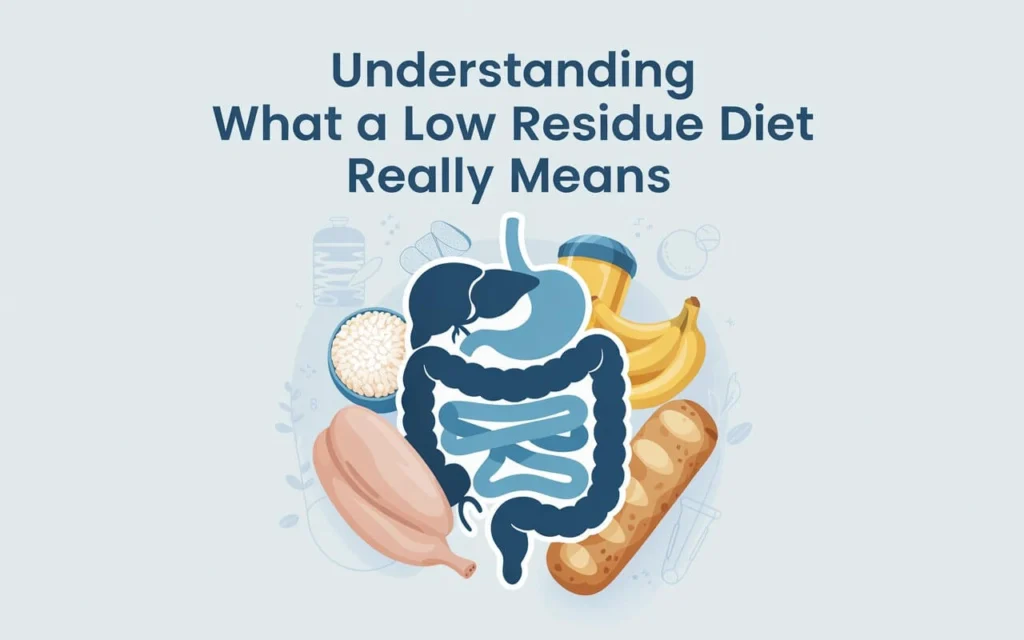
If you’re asking what is a low residue diet, the simplest explanation is that it’s an eating plan designed to reduce the amount of undigested food moving through your intestines.
Residue refers to the waste that remains after digestion, mainly from high-fiber foods. This approach limits fiber, tough textures, seeds, skins, and certain dairy products so the digestive system has less work to do.
This type of diet is often recommended:
- Before or after gastrointestinal surgery
- Prior to colonoscopy prep
- During flare-ups of Crohn’s disease or ulcerative colitis
- When bowel rest is medically necessary
Unlike long-term wellness diets, this approach is usually temporary and medically guided.
Low Residue Diet vs Low Fiber Diet: Clearing the Confusion
One question I hear frequently is about the low residue diet vs low fiber diet debate. While the two approaches sound similar, they are not identical. A low-fiber eating plan mainly focuses on reducing fiber intake, whereas the other approach goes further by also limiting:
Dairy products that increase stool bulk
Foods that leave behind indigestible particles
Certain fats that may slow digestion
In short, all plans that restrict residue are low in fiber, but not all low-fiber plans reduce residue to the same extent. This distinction is especially important when managing sensitive digestive conditions.
Foods to Eat on a Low Residue Diet
Understanding which foods are gentle on the digestive system makes the process far less stressful. The goal is to select soft, refined, and easily digestible options that won’t irritate the intestines.
Grains and Starches
- White bread without seeds
- Plain bagels or rolls
- White rice and refined pasta
- Low-fiber cereals like cream of wheat
Protein Sources
- Eggs (boiled or scrambled)
- Tender poultry without skin
- Soft fish
- Smooth nut butters (in small amounts)
Dairy (If Tolerated)
- Milk
- Yogurt without fruit pieces
- Mild cheeses
Fruits and Vegetables (Prepared Correctly)
- Applesauce
- Canned peaches or pears
- Well-cooked carrots or zucchini (no skins)
As a healthy snack blogger, I often suggest simple options like yogurt or white toast with smooth peanut butter when readers need gentle nourishment without digestive strain.
Foods to Avoid on a Low Residue Diet
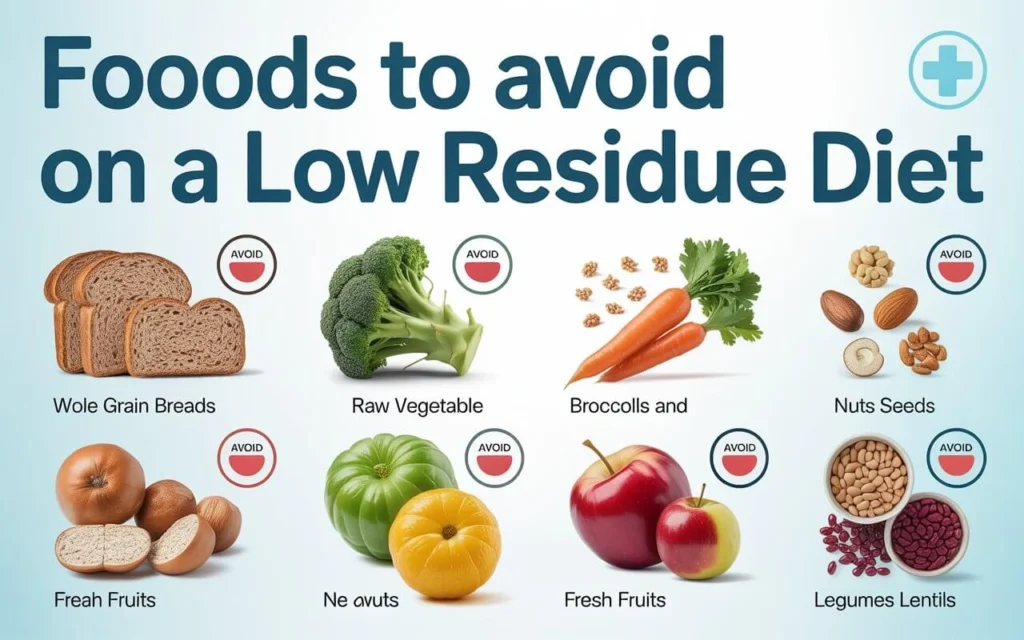
Equally important is understanding the foods to avoid on a low residue diet, as these tend to irritate the digestive tract or increase stool volume.
- Whole grains and bran
- Nuts, seeds, and popcorn
- Raw vegetables
- Fruit skins and dried fruits
- Beans and lentils
- Tough meats
- Spicy or heavily seasoned foods
Avoiding these foods temporarily can significantly reduce bloating, cramping, and bowel urgency.
Building a Simple Low Residue Diet Meal Plan
A practical low residue diet meal plan doesn’t need to be complicated. Here’s a sample day that balances nutrition and digestion:
Breakfast:
Scrambled eggs with white toast and a small glass of milk
Mid-Morning Snack:
Plain yogurt
Lunch:
White rice with baked chicken and well-cooked carrots
Afternoon Snack:
Applesauce or a banana without strings
Dinner:
Plain pasta with mild cheese sauce and soft fish.
This structure works well for people who are used to frequent snacking but need digestive calm rather than fiber density.
Benefits and Limitations You Should Know
Key Benefits
- Reduces bowel irritation
- Helps manage digestive flare-ups
- Supports recovery after GI procedures
- Minimizes abdominal pain and diarrhea
Important Limitations
- Not nutritionally complete long-term
- Low in fiber, vitamins, and antioxidants
- Should only be followed under medical advice
As someone who usually promotes fiber-rich snacks, I always remind readers that this diet is a temporary medical tool, not a permanent lifestyle.
Real-Life Case Study: Managing Digestive Recovery
One reader I worked with, Sarah (name changed for privacy), was an active professional focused on weight management and clean eating. After being diagnosed with ulcerative colitis, she struggled because her usual high-fiber snacks made symptoms worse.
Under her doctor’s guidance, she switched to a low residue diet for six weeks. By replacing raw vegetables and whole grains with refined options and gentle snacks, her symptoms stabilized. Once inflammation reduced, she gradually transitioned back to fiber-rich foods.Her biggest takeaway? Temporary restriction brought long-term relief.This case highlights how strategic dietary changes can support healing without abandoning nutrition altogether.
Tips for Transitioning Back to Regular Eating
Once symptoms improve, foods should be reintroduced slowly:
- Add one new food at a time
- Start with soluble fiber options
- Monitor symptoms carefully
- Stay hydrated
This phased approach prevents setbacks and supports long-term digestive health.
Final Thoughts
The low residue diet plays a vital role in digestive recovery and medical preparation. Although it may feel restrictive at first, understanding its purpose, choosing foods that support digestion, and avoiding common trigger foods makes it far more manageable and effective.
From my experience writing about healthy snacks and real-world eating habits, the best results come from treating this plan as a short-term healing strategy rather than a permanent rulebook. While it differs in structure from plans like the Military diet, following it with patience, thoughtful planning, and proper medical guidance can support a gentle digestive reset and help the body recover more comfortably.
FAQs
What foods are in a low-residue diet?
Soft, refined, and easily digestible foods like white bread, rice, eggs, and cooked fruits and vegetables.
What meals can I make on a low-residue diet?
Simple meals include scrambled eggs, white rice with chicken, plain pasta, and cooked vegetables.
What can I eat on a low-residue diet before a colonoscopy?
Clear liquids, low-fiber foods, and soft, cooked items like eggs, white toast, and broth-based soups.
Are eggs a low residue food?
Yes, eggs are gentle, easy to digest, and safe on a low-residue diet.
Are carrots low in fiber?
Cooked carrots are low in fiber and suitable for a low-residue diet, while raw carrots should be avoided.

Terry is a health blog author and editor for a variety of publications. He has written on a wide range of topics, from fitness to nutrition to mental health. He loves working with people who are passionate about improving their lives through bettering their bodies and minds by eating right and staying active as well as those who want to improve their mental health by living life authentically without feeling ashamed or embarrassed about what they’ve been through.